Quick Premium Knurling Tools
Tools used in knurling technology always have special requirements with respect to quality, precision, stability, and especially technological know-how. Trade Tools recommends the Quick brand for any high-end knurling job.
In knurling technology, there are two different processes: cut knurling and form knurling. Both processes have their special applications and areas of utilisation.
Cut Knurling
Cut knurling is a machining process that uses cutting. The material is removed while being supplied at an axial feed rate. This process can therefore also be used for thin-walled or soft materials, as well as hard-to-machine materials.
Advantages:
• Maximum precision and surface quality, therefore especially suitable for visible knurling
• Knurling of thin-walled workpieces is possible without deformation
• Time savings due to faster cutting speed and feed rate
• Machining of virtually all materials, including grey cast iron and plastic
• Zero or only minimal alteration of the workpiece diameter
• Minimal surface compaction
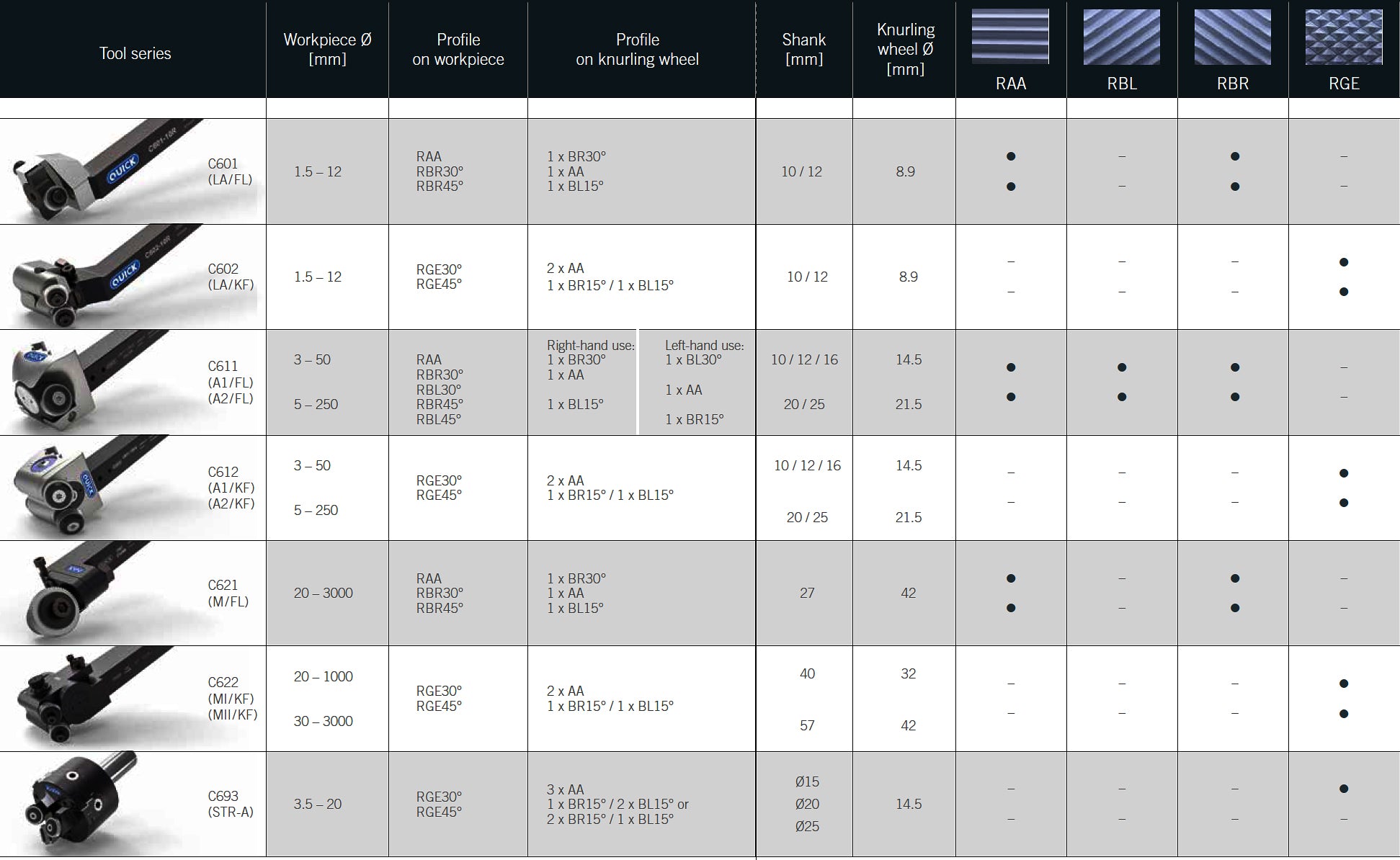
KNURLING: HOW IT WORKS
FORM KNURLING
In form knurling process the surface of the workpiece is formed chipless. Cold forming is used to shape the material, which limits its use to materials that are suitable for cold forming.
Advantages:
• Machining of the workpiece by cold forming, which compresses the surface of the workpiece
• Knurling is possible all the way to a workpiece shoulder
• All knurling profiles according to DIN 82 can be produced
• Knurling is possible at any position on the workpiece
• Knurling of inner and end faces is possible
• Conical knurling is possible
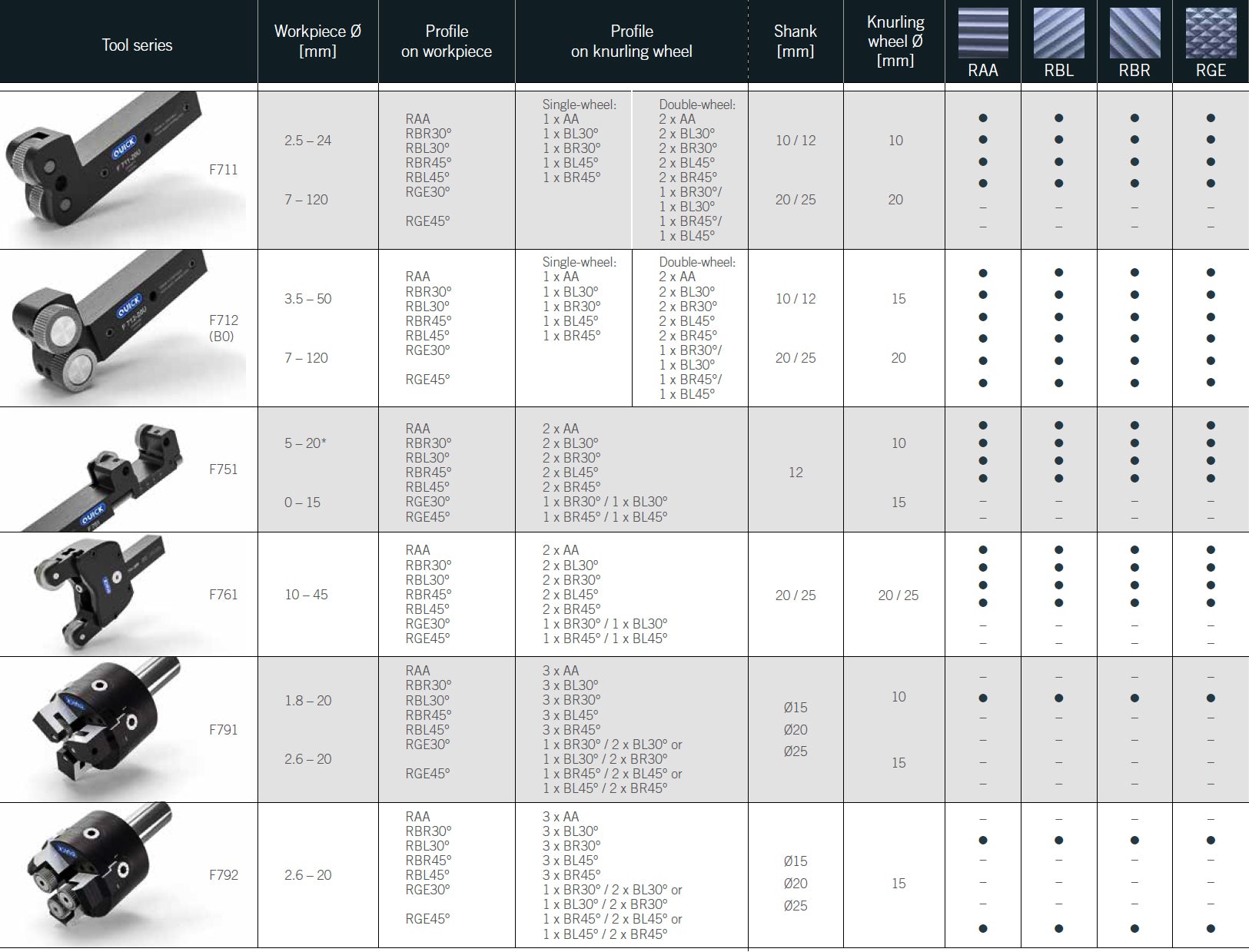
FORM KNURLING: HOW IT WORKS